In all our courses we will introduce and teach the following:
ROBOT HARDWARE
& SOFTWARE:
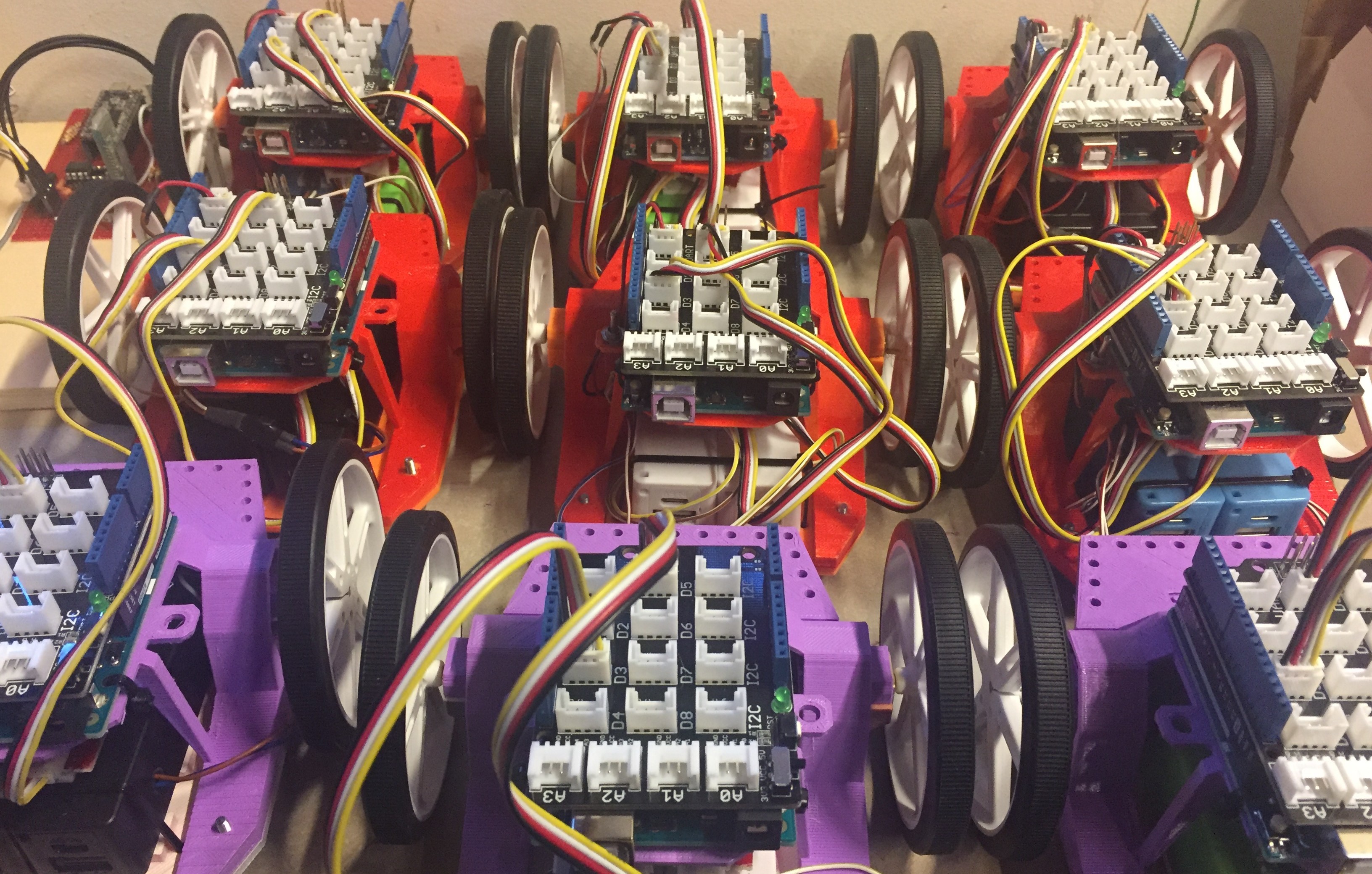
Description of the SPECS 3D printed robot platform; Introduction to Basic Electronics (Arduino); Use of potentiometers; Use of LEDs; Motors, servos; Analog / digital sensors
COMMUNICATION:
Serial Port, Bluetooth or I2c; Introduction to the Pixy camera; Introduction to MIT app inventor 2-; Introduction to 3D Design and 3D printing; history of robotics, introduction to Artificial Intelligence and Bio-Robotics.
PROGRAMMING:
Introduction to Scratch and C programming languages as well as other forms of coding
ROBOT BEHAVIORS:
Responding to flashlight signals; Following lines and mazes of lines; Avoiding obstacles; Making multiple robots follow, avoid and interact with lines and objects; Color detection program; Control of the robot through a mobile phone.
____________________________________________________________________________________________________________________________________________________________________________________

I: Discovering Robotics
With this course students will learn “ intuitive concepts of programming” that will be used to make mobile robots behave and solve problems.
At the same time, students are introduced to electronics, mechanics, and how to use these technologies with robots. The courses are designed to use 100% free software and students will have the possibility to program with the provided robots and participate in a common challenge at the end of the course.

IV: Building 3D Printed Robots
In this course, students will learn how to “design and 3D print a robot”. At the same time, students are introduced to the electronics, mechanics, and the use of these technologies. The courses are designed to use 100% free software and students will have to possibility to design, 3D print, assemble and program their own robots to participate in a common challenge at the end of the course.
II: Controlling robots
The content of the course will allow students to learn formal concepts of programming used to solve real problems with robots. At the same time, students are introduced to the electronics, mechanics, 3D printing and the use of these technologies. The courses are designed to use 100% free software and students will have to possibility to design, 3D print, assemble and program their own robots to participate in a common challenge at the end of the course. Students can work in groups and form competing teams.
V: Robots & AI in Society, Art, and Philosophy
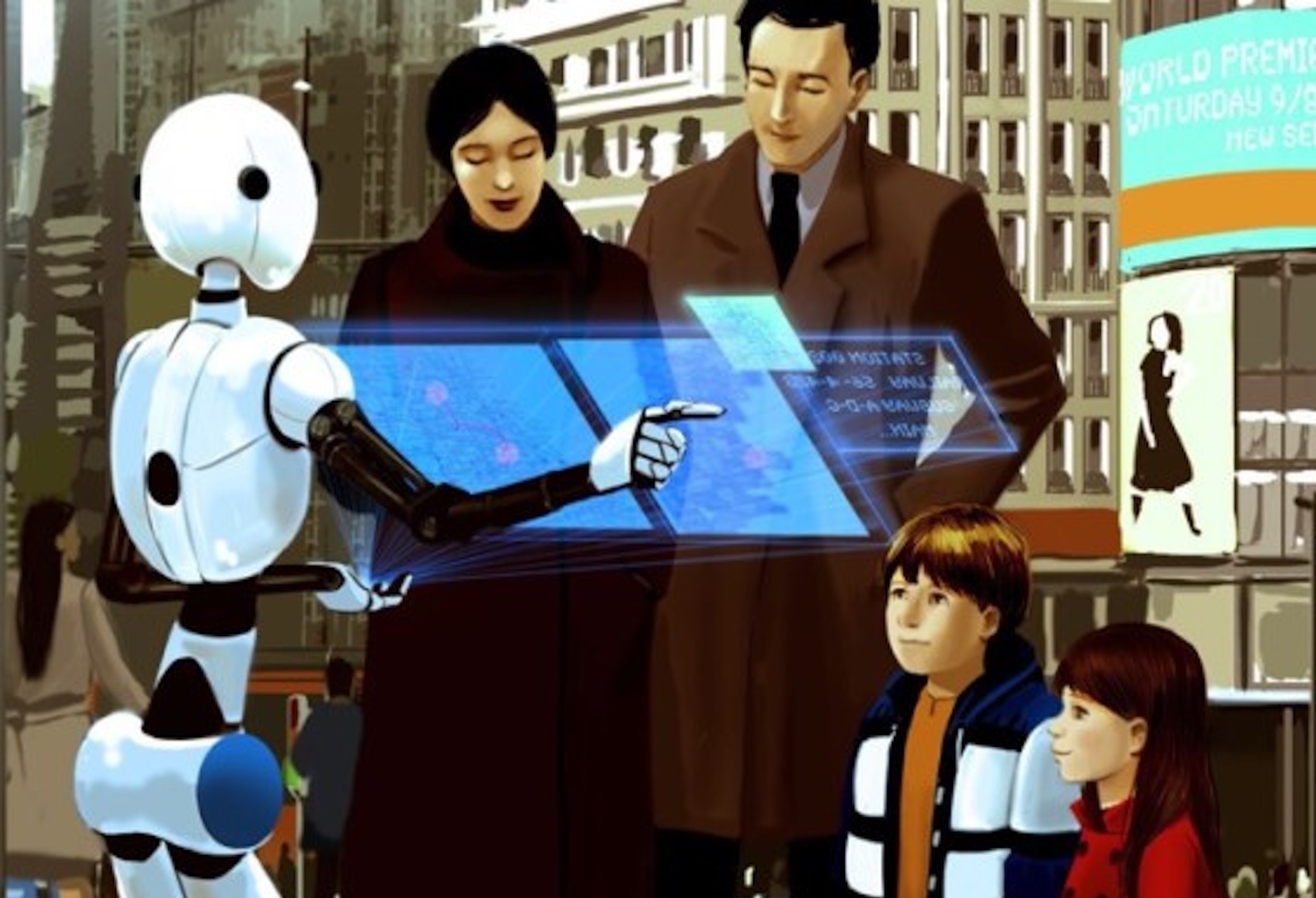
This course introduces students to the challenges and questions that robots and AI rise in the domains of Society, Art and Philosophy. The following concepts will be introduced to students:
III: Animal Robots
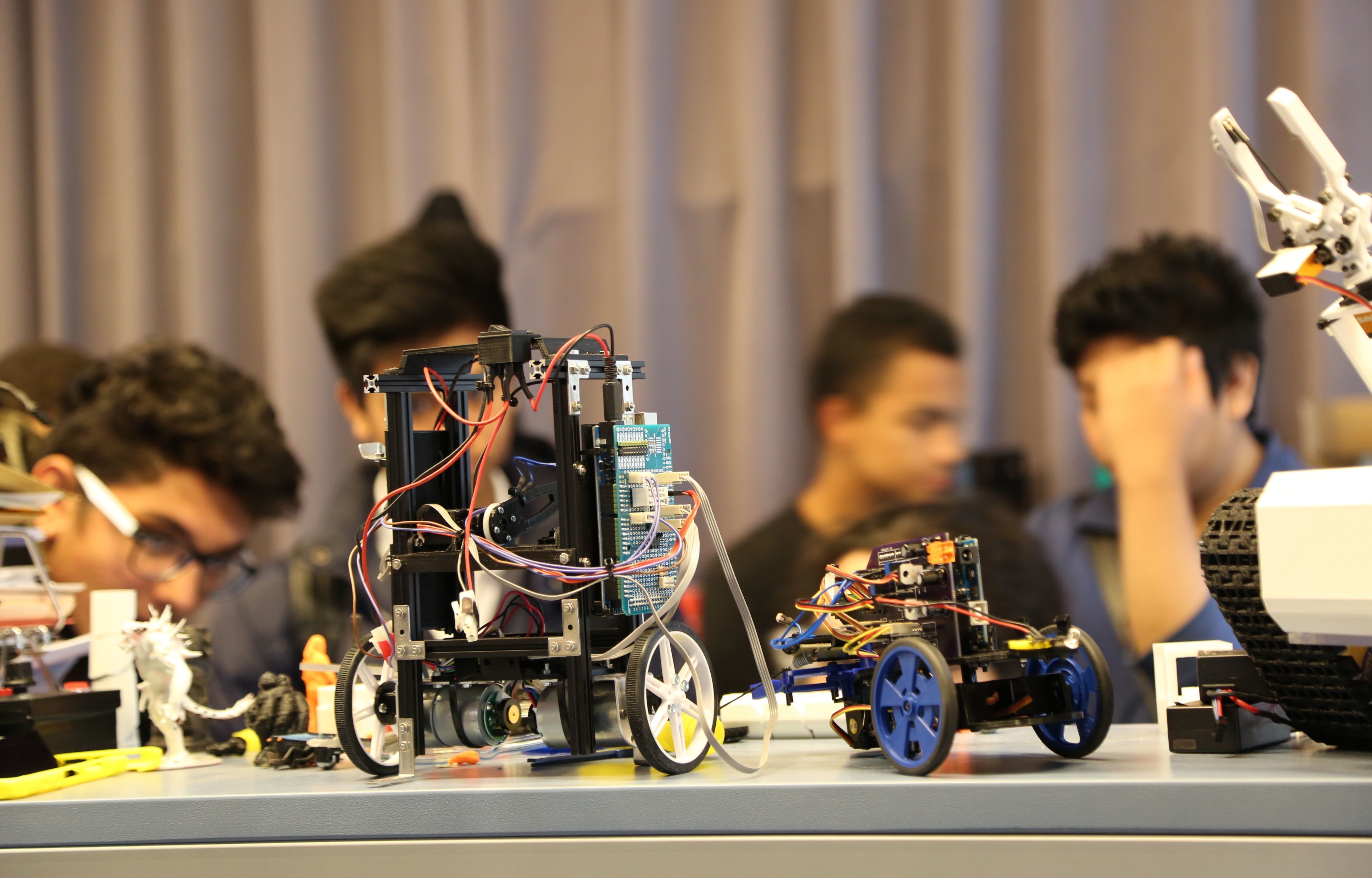
In this course, students will learn about the biological principles behind behaviour and how these can be used to build robots that behave and learn like animals. Students will learn “formal concepts of programming”, “basic techniques from Artificial Intelligence”, “Control Theory and Human-Robot Interaction”. Students will program and gain experience with mobile robots, learn how to control their behaviour and even make them learn. The students will at the end of the course build robot ecology where their robots must “survive”.
____________________________________________________________________________________________________________________________________________________________________________________
Participants, Duration, Material and fees
- Duration: 2 hours per week (January-June 2018)
- Number of students in each course: 20 approximate
- Age Range: 10-16
- Material:
- SPECS.V1 robotic platform with sensors,
- Laptop computer or classroom PCs
- Reading and video material
*** Fees information: please contact directly the school/organization where the courses will take place